

Diagnose your Hair Damage
If you’re noticing that your locks are looking lacklustre, or you’re experiencing a loss in moisture or density, it may be time to diagnose your hair damage. Whether it be a result of chemical, heat, color or environmental damage, damaged hair can develop cracks in the cuticle (outermost) layer. Once the cuticle layer cracks, it lifts, which causes it to appear dull and frizzy. Damaged hair is also at risk for further damage and breakage.
Damaged hair can be stretched between 30% to 70%, causing possible fracture on the hair fiber, increased porosity and hair shaft swelling. On the other hand, wet ‘virgin’ hair can be stretched by 30% of its original length without damage. Therefore, repeated or excessive color and chemical treatments, hot styling tool use and environmental exposure can alter that hair’s texture, even resulting in breakage.
The cuticle is the outermost layer of the hair shaft and is the first line of defense that safeguards the internal structure of the hair fiber. The pigment, or melanin, is responsible for the natural color of the hair and sits in the middle layer of the hair shaft, the cortex.
MONPURE are here to provide insight into the various types of damage your strands can be subjected to, their common causes, and what you can do to prevent and combat against damage as a whole.
Color Damage
Whether you’re experimenting with the colors of the rainbow, going bleach blonde or trying to cover up your greys - coloring, dyeing or bleaching your hair can have some unwanted consequences. So, how exactly do color treatments damage the hair?
Bleaching
- Bleach is used to remove the natural pigment from the hair by making the hair strands swell, allowing bleach to penetrate into the cortex (middle layer) of the strand. Here, it dissolves the melanin contained in the cortex to achieve the desired result. Then, you apply a demi- (lasts up to 25 washes) or semi-permanent (lasts up to 5 washes) color to deposit the tone, making it a two-step process. The toner works to neutralize the unwanted brass or yellow undertones of hair that has been bleached.
- Bleaching is damaging because hydrogen peroxide not only interacts with the melanin within the hair strands, it also interacts with proteins such as keratin, which make up the structural integrity and robustness of the hair strand.
Coloring or Dyeing
- Hair coloring is used to deposit color onto the hair strands. Semi-permanent dye is an ammonia-free color that simply coats the surface of the strands for a temporary wash of color. Demi-permanent hair dye is an ammonia free dye that contains a developer, allowing it to penetrate under the outer cuticle of your hair.
- Permanent hair dye removes the natural color from the hair by filling it with artificial color. It does this by lifting the cuticle using high alkalinity ingredients like ammonia or monoethanolamine, which allow the cuticle to lift and swell, trapping the artificial color molecules inside the hair fiber.
- Damage from permanent hair dye is caused from repeatedly opening and closing the cuticle of the hair shaft, which compromises the bonds that hold the structure of the hair together. The process can leave hair porous, dry, brittle and fragile, making it permanently weakened and less elastic.
Chemical Damage
Chemical treatments, such as perms, relaxers or permanent waving, can be extremely damaging to the hair. Chemical treatments, such as wavers, are accomplished by first treating the hair with a reducing agent that breaks the disulfide bonds, allowing the hair to be manipulated into the desired formation. Disulfide fonds are the chemical bonds that hold the hair’s proteins together. It is then treated with a chemical called H202, which reforms the bonds.
A 2015 study from the Journal of Cosmetic Sciences illustrated through image analysis and measurement that chemical treatments lead to a reduction in the hair fiber's overall mechanical properties, causing damage to structural proteins as well as surface damage.
Heat Damage
A dependence on styling with hot tools can wreak havoc on the health of your hair if not done with caution and using protective measures. Heat opens the cuticle layer of the hair strand, allowing the hair to dry into the shape and formation created when blow-drying, curling or straightening your hair.
A 2015 study from the Journal of International Trichology showed that using a hair dryer causes more surface damage to the hair than natural or air drying. However, using continuous motion and drying hair at a distance of 15cm reduces the chance of damage significantly.
Bubble Hair
A tell-tale sign of thermal damage is bubble hair. Bubble hair is a condition that emerges from excessive and localized heat application to damp or wet hair, using hair dryers over 175°C+ and styling tools over 125°C.
The localized application of heat onto one area of hair actually vaporizes water inside the hair fiber, which boils into steam. The steam is then trapped beneath the cuticle and within the cortex, forcing spaces in the hair to expand. The heat also destroys the protein structures within the strands, leaving damaged hair brittle and weak, with bubbles destroying the integrity of each hair fiber.
The overall texture of hair damaged from hot styling tools can change from soft and naturally curly to stiff, straight and brittle with frizzy ends. The ends are usually the most damaged area and can feel like straw in texture.
Environmental Damage
The urban environment can take a serious toll on the health and condition of your hair. Environmental aggressors such as pollution and UV rays can significantly impede the health of your hair and scalp, and may even exacerbate hair loss.
Pollution
Air pollution, most abundant in urban environments and cities, is made up of particulate matter (fragments of soot, grime and dust), as well as gaseous pollutants. This matter binds to the surface of the hair, permeates the follicle and settles on the surface of the scalp. So, why is this detrimental?
Pollution causes structural and chemical alterations in the cuticle, cortex and the degradation of keratin. In fact, research from the National Academy of Sciences has shown that hair exposed to higher concentrations of pollution experiences increased cuticle and cortex damage. Damage caused by pollution gives hair a brittle, rough and dull appearance.
UV Radiation
Sunlight radiation is made of UVA and UVB radiation, both of which can be harmful to the hair and scalp. Let’s explore how different forms of UV radiation impede hair health and contribute to damage…
- UVB radiation results in the morphological damage of the hair strands. These rays primarily attack the melanin pigment and protein components of the hair. They also break down the disulfide bonds that are integral to the structural integrity of the hair. UVB radiation damage can lead to a loss of tensile strength, cause irregularities on the hair’s surface and increase the porosity of the hair.
- Due to its wavelength, UVA radiation is able to penetrate deep into the cuticle and cortex layers of the hair strand. It is primarily responsible for pigment changes in the hair. Prolonged exposure to UVA rays deteriorates a fatty acid found on the surface of the cuticle called 18-methyleicosanoic acid, which provides hair with softness and shine. UVA rays also erode essential amino acids cysteine, tryptophan and tyrosine, which give hair strength and contribute to healthy hair growth.
- Chemical changes caused by UVA radiation result in loss of shine, brittle hair, poor manageability, surface friction, as well as color loss and hindered tensile strength.
Combating Hair Damage
MONPURE’s results-driven range features a range of pioneering ingredients that are scientifically proven to not only shield and protect against hair damage in various forms, but also repair damaged follicles and rebuild their structural integrity.
Vegan Silk Proteins
- Improve carbon particle removal up to 26%
- Improve color protection by 35%
- Improve thermal damage repair by 72%
Find Vegan Silk Peptides in…
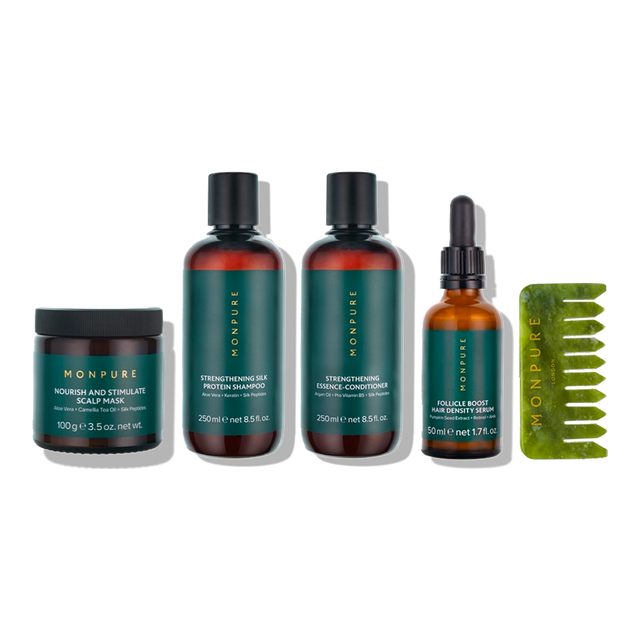
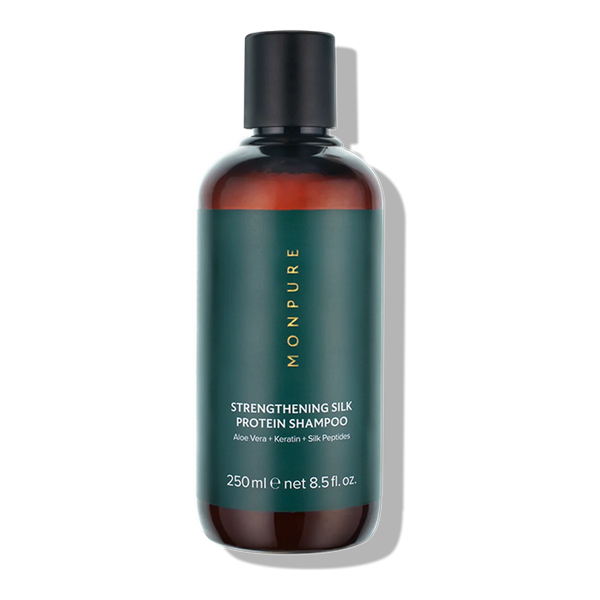
Strengthening Silk Protein Shampoo
Strengthening Essence-Conditioner
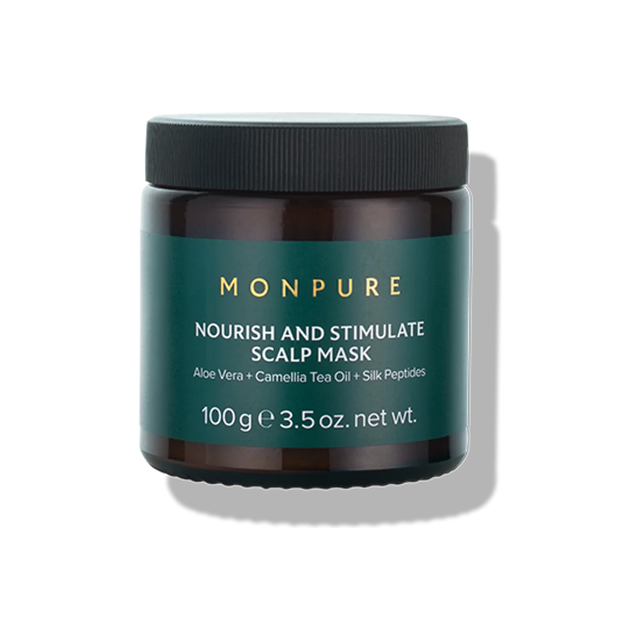
Nourish and Stimulate Scalp Mask
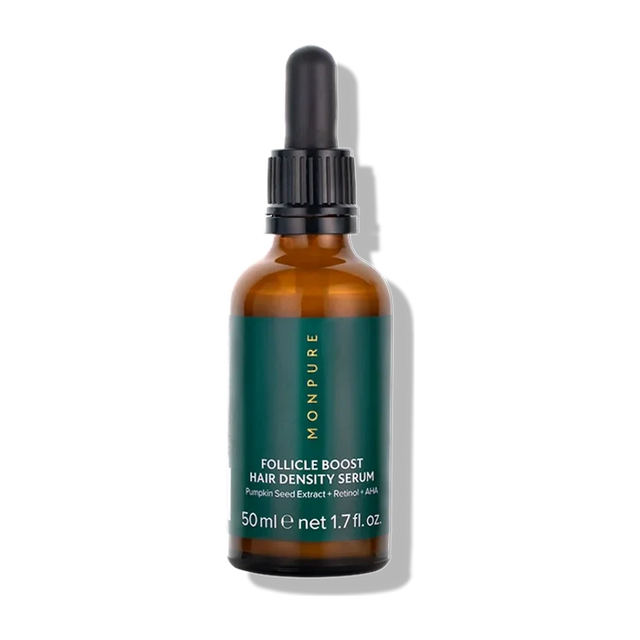
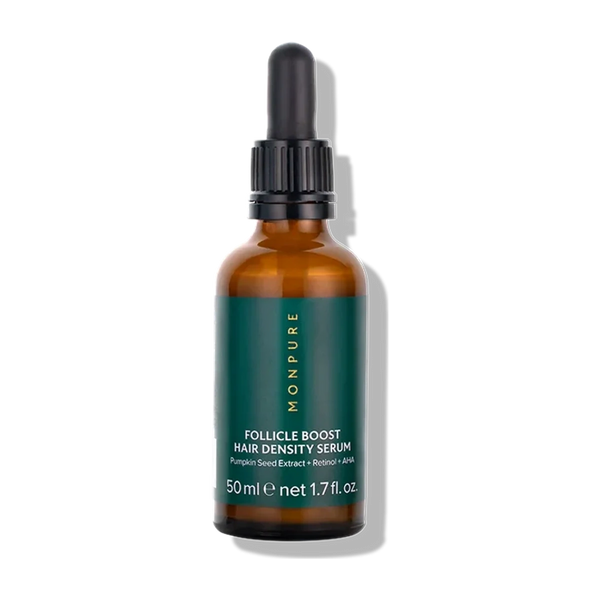
Follicle Boost Hair Density Serum
Vegan Keratin
- Smooths down the overlapping layers of the vulnerable cuticle
- Strengthens the bonds between follicles, allowing roots to grow stronger, reinforce structural integrity and prevent breakage
- As the building-blocks of the hair structure, keratin helps repair damaged follicles
Find Vegan Keratin in…
Strengthening Silk Protein Shampoo